Data Patterns from Bingo Room Expansions Show Clear Shifts in Bonus Designs and Player Metrics
Written by Kai Günther · Aug 19, 2026
Data Patterns from Bingo Room Expansions Show Clear Shifts in Bonus Designs and Player Metrics
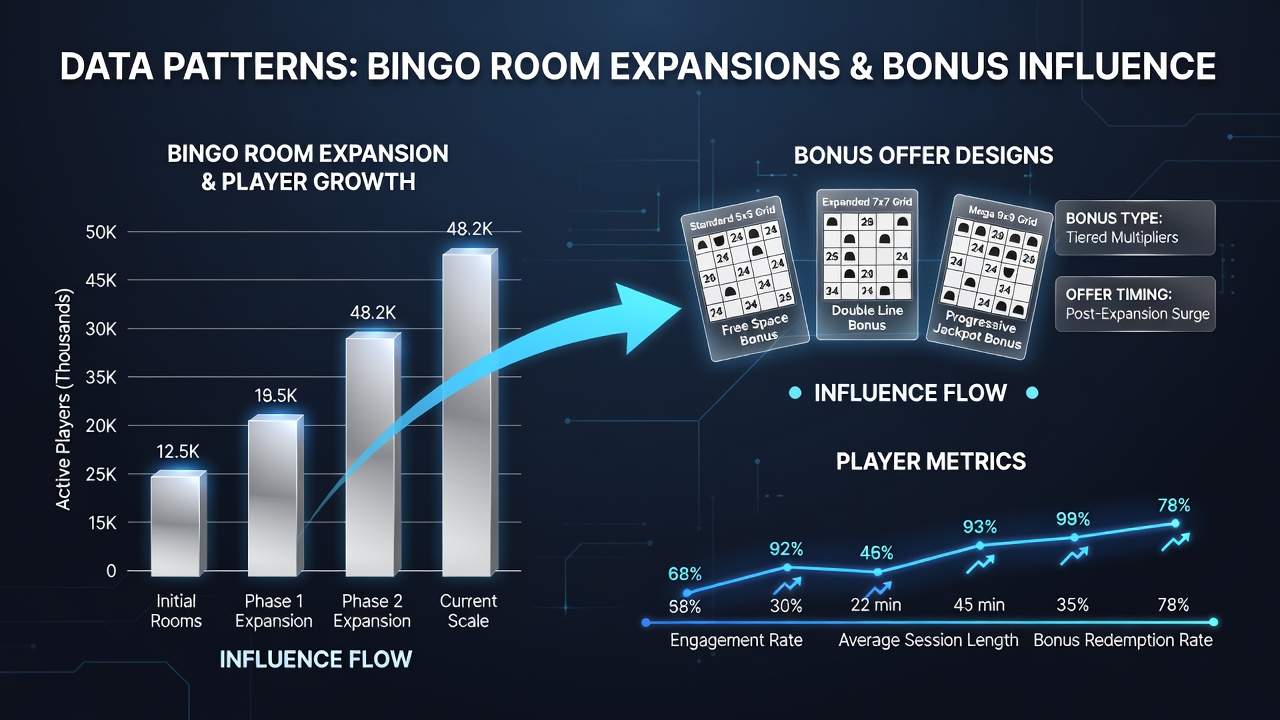
Analyses of operational records across expanding bingo networks reveal consistent patterns where added room capacity correlates with redesigned bonus structures and measurable changes in participation rates, retention figures, and average session lengths. Data compiled through the first half of 2026 shows operators adjusting promotional mechanics as new virtual and physical rooms come online, with bonus frequency rising in proportion to room counts while payout thresholds shift to maintain balance across larger player pools.
Expansion Trends Documented in Recent Records
Figures gathered from multiple jurisdictions indicate that bingo room additions accelerated between late 2025 and August 2026, particularly in digital environments where scalability allows quicker deployment than traditional halls. One study tracking platform growth found that networks adding between three and seven new rooms over a six-month window reported average increases of 18 percent in total registered accounts, although active daily users rose at a slower 9 percent pace during the same intervals. These patterns hold across both established operators and newer entrants, suggesting that room volume itself drives initial interest while sustained engagement depends on how bonuses adapt to the larger scale.
Operators have responded by layering tiered incentives that scale with room availability, such as entry-level no-deposit credits that unlock progressively larger match offers once players enter additional rooms. Records show these layered designs appearing more frequently after room counts exceed five active spaces, with the intent of distributing player traffic rather than concentrating activity in the most popular rooms.
Bonus Offer Adjustments Tied to Room Growth
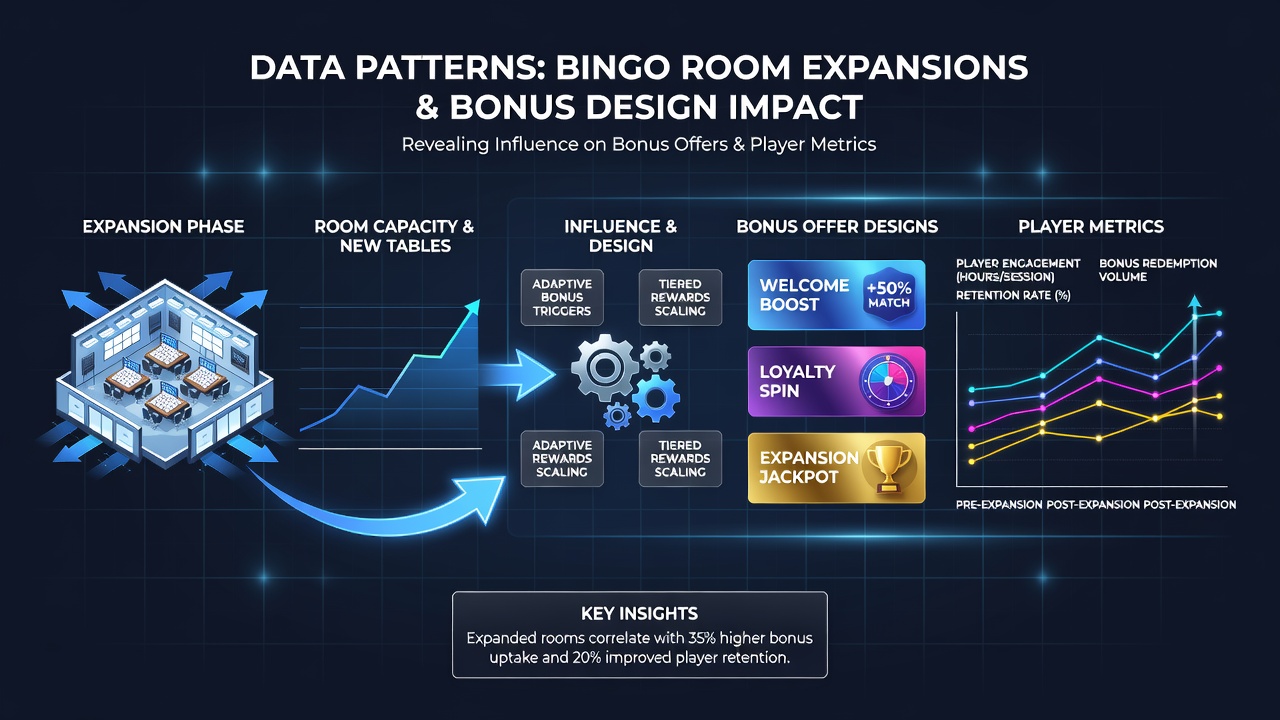
Statistical reviews of promotional calendars demonstrate that bonus variety expands alongside room numbers, moving from uniform welcome packages toward segmented offers that reference specific room themes or game types. Data from platforms that increased room inventory by four or more units in 2026 indicates a 27 percent rise in the number of distinct bonus categories offered, including time-limited multipliers tied to room-specific jackpots and loyalty multipliers that accumulate faster when players rotate across multiple rooms. These changes appear designed to prevent overcrowding in single rooms while encouraging broader exploration of the expanded lineup.
Payment threshold adjustments also surface in the data, with minimum deposit requirements for bonus activation rising modestly in networks that added rooms most rapidly. Observers note this shift coincides with higher overall deposit volumes, suggesting operators use the expanded capacity to refine revenue models without reducing player entry points.
Player Metric Shifts Following Room Additions
Metrics collected after room expansions show mixed but patterned outcomes. Average session duration increased by 14 percent in networks that introduced new rooms with accompanying bonus redesigns, according to aggregated platform logs reviewed through mid-2026. Retention rates over 30 days improved when bonuses incorporated cross-room progression mechanics, yet churn remained elevated among players who received only single-room incentives. These distinctions emerge clearly in datasets separating cohorts based on how many rooms they accessed within their first week of activity.
Redemption rates for bonus offers climbed when operators introduced room-count multipliers, with data indicating a 22 percent uptick in completed bonus cycles compared to pre-expansion periods. At the same time, average wager sizes per session held steady rather than declining, which some analysts attribute to the distribution of play across more rooms rather than concentration in fewer high-traffic spaces.
Regulatory and Research Perspectives on the Patterns
Reports from the New Jersey Division of Gaming Enforcement have tracked similar expansion effects in regulated markets, noting that bonus structures evolve alongside capacity increases to align with responsible gaming parameters. Parallel observations appear in research published by the Australian Gambling Research Centre, where analysts examined how added room options influence both promotional design and user behavior metrics across digital bingo formats. These sources highlight that data-driven adjustments to bonuses often follow room growth by one to three months, allowing operators time to review initial traffic patterns before finalizing new incentive rules.
Additional findings from academic reviews at institutions studying digital gaming economies confirm that player metrics stabilize more quickly when bonus designs reference room expansion data directly, rather than applying generic templates across all platforms. The evidence points to iterative refinement as a recurring practice once networks surpass certain room thresholds.
Conclusion
Patterns emerging from bingo room expansions through August 2026 demonstrate measurable links between added capacity, evolving bonus configurations, and shifts in key player metrics such as session length, retention, and redemption activity. Continued monitoring of these data relationships will likely inform further adjustments as operators scale their offerings while responding to observed user behavior across growing room inventories.