Player Suggestions Reshaping Prize Mechanics in Mobile Gaming Platforms
Written by Theo Lehmann · Jul 17, 2026

Player Suggestions Reshaping Prize Mechanics in Mobile Gaming Platforms
Digital gaming rooms rely on continuous streams of player data to refine prize structures, and feedback loops stand at the center of these adjustments because developers track comments, ratings, and behavioral patterns in real time. When users highlight difficulties with certain reward triggers or suggest modifications to jackpot activation thresholds, teams translate those signals into code updates that alter payout frequencies and feature availability across mobile interfaces. Studies from academic institutions show that such cycles reduce drop-off rates while increasing session lengths, since changes align more closely with actual player expectations rather than assumptions made during initial design phases.
Collection Methods Behind Feedback Integration
Platforms gather input through multiple channels that include in-app surveys, star ratings on individual features, and logged interactions with prize elements like bonus rounds or progressive pools. Researchers at various universities have documented how aggregated datasets from these sources reveal patterns that isolated testing misses, because thousands of sessions expose edge cases in user journeys. For instance, one analysis conducted in early 2026 demonstrated that players who encountered repeated failures to unlock no-deposit style rewards submitted suggestions that directly prompted recalibration of eligibility algorithms within weeks.
External regulatory bodies also contribute oversight data, with the Australian Communications and Media Authority publishing aggregated reports on player engagement metrics that developers cross-reference against internal feedback. These reports help identify broader trends without revealing individual identities, allowing teams to prioritize tweaks that maintain compliance while responding to community requests.
Analysis and Prioritization of Incoming Signals
Once collected, feedback enters processing pipelines that apply machine learning models to categorize comments by theme and urgency, separating isolated complaints from recurring issues that affect large user segments. Observers note that this step proves critical because raw volume alone does not indicate importance; instead, correlation with retention metrics determines which suggestions receive development resources. Data indicates that prize-related feedback often clusters around activation speed and perceived fairness, prompting adjustments to random number generators or visibility of progress indicators.
Implementation in Prize Feature Updates
After prioritization, developers deploy incremental patches that modify mobile prize features without requiring full app reinstalls, a process that keeps changes transparent to users yet measurable through subsequent engagement tracking. One documented case involved revisions to side game access based on repeated player notes about limited availability, resulting in expanded room options that boosted overall participation figures reported in July 2026 industry summaries. Such updates rely on A/B testing frameworks where subsets of users experience revised mechanics first, and performance data dictates wider rollout.
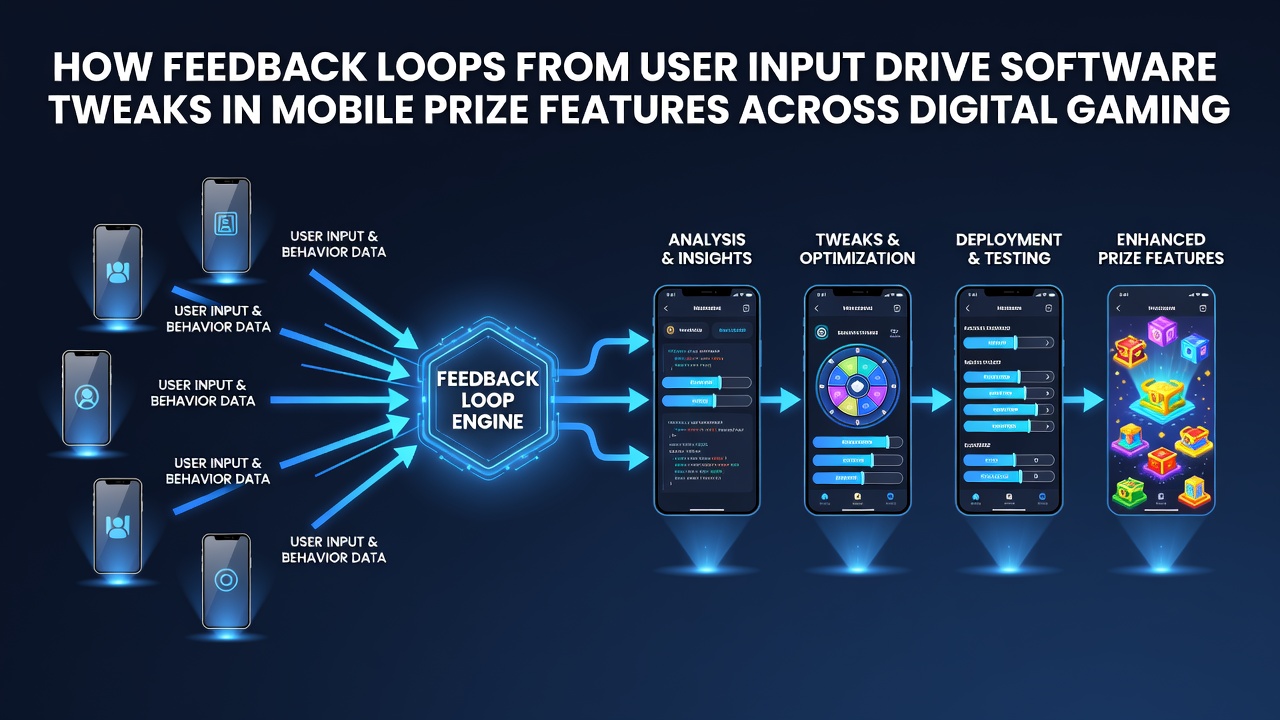
What's interesting is how these loops extend beyond direct suggestions to encompass implicit signals like abandonment points during prize claims, because such behavioral data often highlights friction that explicit comments overlook. Teams then combine both explicit and implicit inputs to refine algorithms governing reward distribution, ensuring mobile interfaces respond dynamically to collective preferences while preserving randomness essential to gaming integrity.
Geographic and Regulatory Influences on Tweaks
Regional differences shape how feedback translates into software changes, since European data protection standards limit certain tracking methods compared with North American practices, forcing developers to rely more heavily on anonymized suggestion portals. A report from the Canadian Gaming Association highlights instances where cross-border platforms adapted prize visibility settings after receiving jurisdiction-specific input, demonstrating that localized loops produce distinct feature variations even within the same underlying codebase. Those adaptations maintain consistency in core mechanics yet accommodate varying player priorities across markets.
Industry organizations such as the International Association of Gaming Regulators have compiled comparative studies showing that platforms incorporating structured feedback mechanisms achieve faster iteration cycles than those depending solely on internal QA processes. Figures reveal measurable lifts in user satisfaction scores following targeted prize adjustments, particularly when changes address mobile-specific constraints like screen size and touch responsiveness.
Long-Term Effects on Platform Evolution
Over successive cycles, accumulated tweaks contribute to broader architectural shifts where prize features evolve from static elements into adaptive systems that anticipate player needs based on historical input patterns. This progression occurs because each round of refinement feeds new data back into teh loop, creating compounding improvements that single updates cannot achieve alone. Observers note sustained growth in active user bases for platforms that maintain transparent communication about implemented changes, since players recognize when their input influences outcomes.
Academic papers from research centers have modeled these dynamics as closed-loop control systems, where error signals from user dissatisfaction drive corrective actions in software parameters governing prize allocation. The models predict continued acceleration of update frequency as data volumes grow, especially with rising adoption of real-time analytics tools in mobile development environments.
Conclusion
Feedback loops from user input continue to guide precise modifications in mobile prize features throughout digital gaming rooms, supported by systematic collection, analysis, and deployment practices that respond to both explicit suggestions and behavioral evidence. Regulatory sources and industry reports confirm that these processes yield measurable alignment between platform capabilities and player expectations, fostering iterative development that adapts to emerging patterns without compromising operational standards. As data collection methods advance, the cycles are expected to become even more responsive, shaping future prize mechanics across global mobile gaming environments.