Tracing Bingo's Charitable Heritage and Its Subtle Effects on Worldwide Digital Platform Funding Structures
Written by Theo Lehmann · Jul 10, 2026
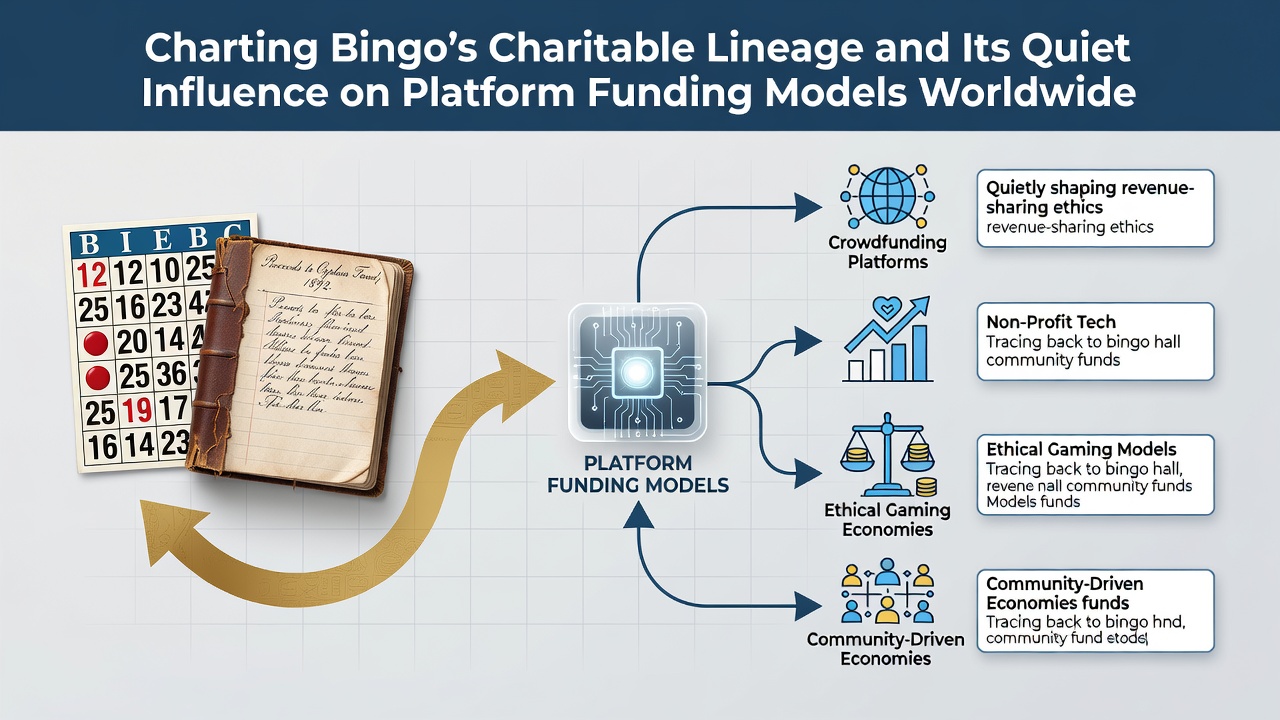
Tracing Bingo's Charitable Heritage and Its Subtle Effects on Worldwide Digital Platform Funding Structures
Bingo traces its documented roots to 16th-century Italy under the name Il Gioco del Lotto d'Italia, yet its modern charitable associations emerged strongly in the 18th and 19th centuries across Britain and later North America where community groups adopted the game to raise funds for churches, schools, and relief efforts. Observers note that these early models required operators to direct a fixed portion of ticket sales toward designated causes, which created a regulatory template still visible in licensing frameworks today.
By the mid-20th century, bingo halls in the United States operated under state laws that tied permits to nonprofit status, with proceeds allocated to veterans' organizations, hospitals, and civic projects. Canadian provinces adopted parallel approaches, while Australian states introduced similar charitable gaming provisions after World War II. Researchers at the Australian Institute of Criminology have documented how these rules shaped revenue distribution formulas that persist in contemporary licensing conditions.
Regulatory Foundations Across Regions
Legislatures in multiple jurisdictions embedded charity requirements directly into bingo statutes, which meant operators could not retain full margins without demonstrating contributions to approved beneficiaries. In Ontario, for instance, charitable gaming licences mandate minimum return percentages to good causes, and data from the provincial gaming authority shows consistent allocation patterns through 2025. European countries outside the United Kingdom followed comparable paths, with the Netherlands and Sweden maintaining separate charitable bingo categories that limit commercial profit shares.
These structures influenced platform architecture once digital bingo expanded. Developers built backend systems that automatically segregate portions of entry fees into charity accounts before any player rewards or operator fees are calculated. The same logic appears in affiliate and revenue-share agreements used by platforms operating across borders, where contractual clauses echo the old percentage-to-cause rules.
Quiet Transmission Into Digital Models
Platform funding mechanisms worldwide now incorporate elements first codified for physical charity bingo. Revenue splits often reserve a defined slice for designated funds, whether those funds support community programs or feed into player loyalty pools that function similarly to legacy prize allocations. In July 2026, several Canadian and Australian operators reported updated compliance filings that highlighted increased transparency in these segregated accounts following new reporting standards introduced earlier that year.
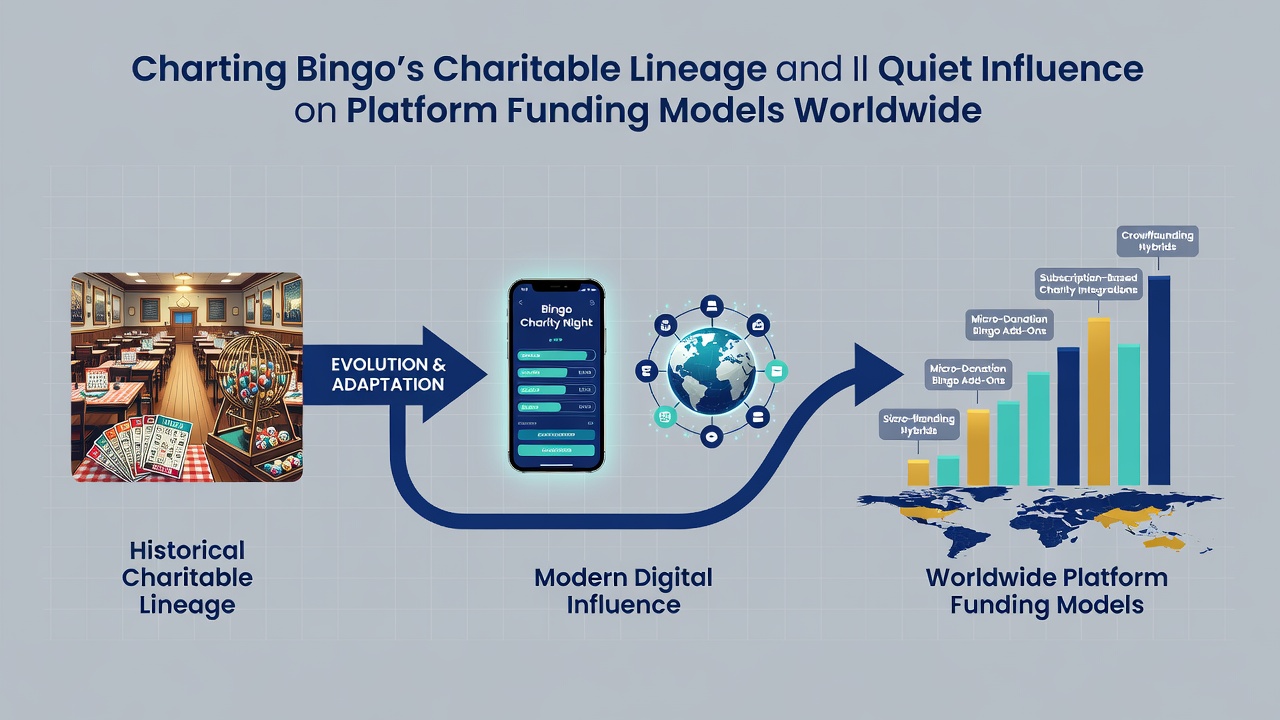
Payment processors and software vendors adapted their APIs to handle multi-party disbursements, routing charity portions automatically to verified nonprofit ledgers. This technical inheritance reduces administrative overhead while satisfying licensing bodies that still require proof of social benefit. Observers note that jurisdictions without explicit charity mandates sometimes adopt voluntary contribution programs modeled on the older systems to ease market entry.
Global Variations and Data Patterns
Figures released by the National Council of Charitable Gaming in the United States indicate that licensed bingo events generated over $2 billion in gross receipts during the most recent reporting cycle, with roughly 35 percent directed to charitable recipients after prizes and expenses. Similar proportions appear in aggregated data from provincial Canadian reports. These percentages influence how digital platforms structure bonus pools and jackpot seeding, because regulators often view such features as extensions of the original prize-plus-cause framework.
Academic studies from the University of Nevada's International Gaming Institute have examined how these historical requirements affect player trust metrics, finding that platforms disclosing charity contributions retain higher retention rates in markets where licensing emphasizes social return. The pattern holds across both desktop and mobile environments, suggesting the lineage shapes user expectations even when players never encounter a physical hall.
Conclusion
Bingo's charitable origins continue to inform the economic architecture of digital platforms through licensing conditions, revenue segregation protocols, and reporting standards that span multiple continents. While formats have evolved, the requirement that a measurable share of activity supports external causes remains embedded in operational templates worldwide, providing a consistent thread from 19th-century church halls to current global network models.