Understanding the Framework of Bingo Site Evaluations in 2026
Written by Olivia Richter · Aug 17, 2026
Understanding the Framework of Bingo Site Evaluations in 2026
Observers note that ranking systems for bingo platforms rely on structured data collection methods which incorporate payout percentages, game variety counts, and user engagement statistics gathered across multiple jurisdictions, and these approaches have gained traction as operators adapt to shifting regulatory landscapes through August 2026.
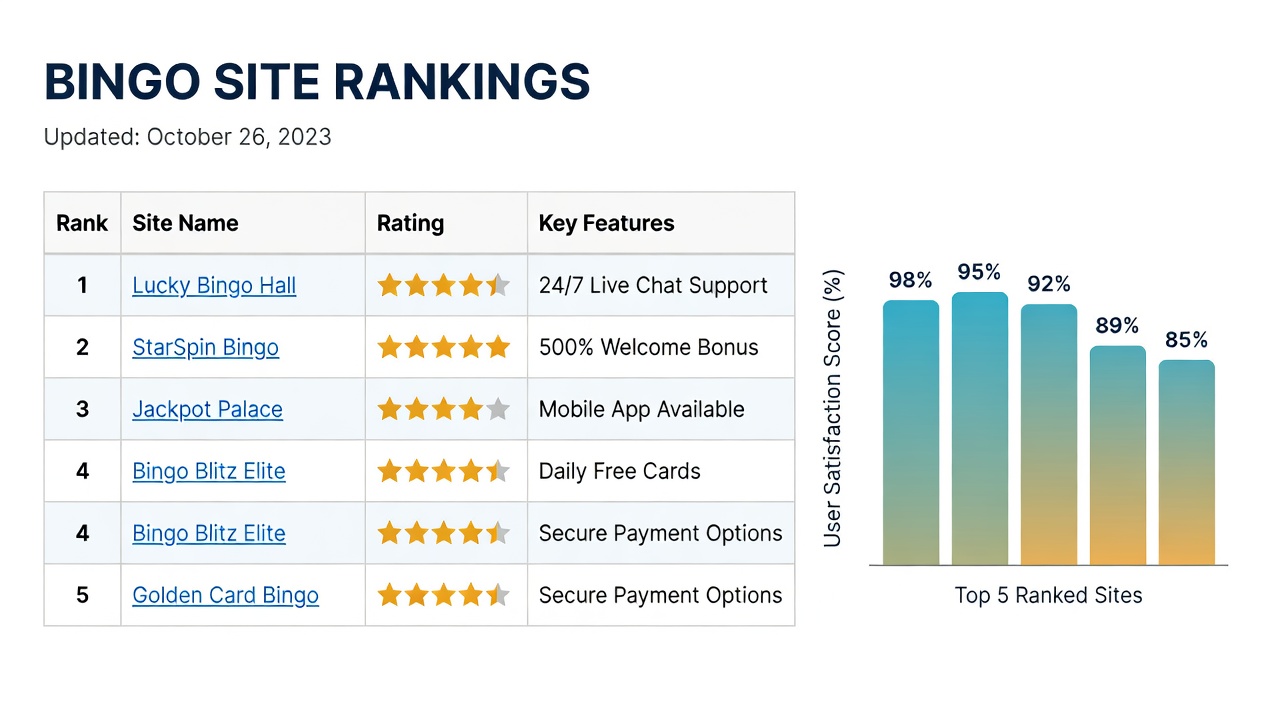
Research from industry bodies shows that evaluation frameworks typically weigh factors such as software reliability alongside security certifications issued by independent testing labs, while payment processing speeds and bonus structure transparency form additional layers in the assessment process, and data analytics firms compile these elements into composite scores updated quarterly.
Core Metrics Driving Platform Comparisons
Analysts track average return-to-player rates across thousands of bingo sessions, and figures reveal that platforms maintaining rates above 94 percent often appear higher in compiled lists because players review historical payout logs before selecting sites, yet mobile optimization scores carry equal weight since access patterns shifted toward smartphones in recent years.
Customer support response times measured in minutes rather than hours influence placement as well, with organizations like the European Gaming and Betting Association publishing guidelines that recommend 24-hour availability windows, and case studies from Canadian operators demonstrate how integration of live chat features correlates with higher retention data.
Data Sources and Collection Methods
Third-party auditors supply verification reports on random number generators and transaction integrity, while aggregated player feedback from verified accounts feeds into sentiment analysis tools that quantify satisfaction levels across bonus redemption processes and room activity levels, and researchers at institutions such as the University of Nevada's International Gaming Institute have documented how these combined inputs reduce bias in final rankings.
What's interesting is the role of regulatory filings from bodies across different regions, including reports filed with the Australian Communications and Media Authority that detail compliance with advertising standards and responsible gaming measures, and these documents provide objective benchmarks that ranking compilers cross-reference against operational performance logs.
Trends Observed Through August 2026
Platform architecture updates incorporating artificial intelligence for personalized game suggestions have entered evaluation criteria more prominently this year, since engagement data indicates that tailored room recommendations increase session durations, and operators adjusting their systems accordingly appear in updated assessments with greater frequency.
Side game integration statistics further refine comparisons because players allocate time to slots or instant win titles alongside main bingo rounds, and reports compiled by research groups show measurable shifts in resource allocation toward diversified libraries without altering core bingo mechanics.
Impact on Player Behavior and Platform Adjustments
Those who've examined longitudinal data find that rankings published in mid-2026 influence sign-up patterns, particularly when new entrants highlight no-deposit trial periods verified through audit trails, yet long-term retention depends more on consistent jackpot distribution algorithms than initial incentives alone.
Community input collected via post-session surveys refines the weighting applied to specific features, such as chat moderation tools or progressive jackpot contributions, and industry organizations note that this feedback loop encourages operators to publish clearer terms for promotions listed in ranking summaries.
Conclusion
Evaluation systems continue to evolve through incorporation of verified performance indicators drawn from regulatory submissions, player analytics, and technical audits, and as of August 2026 these processes support more transparent comparisons across global bingo platforms while maintaining focus on measurable outcomes rather than promotional claims.